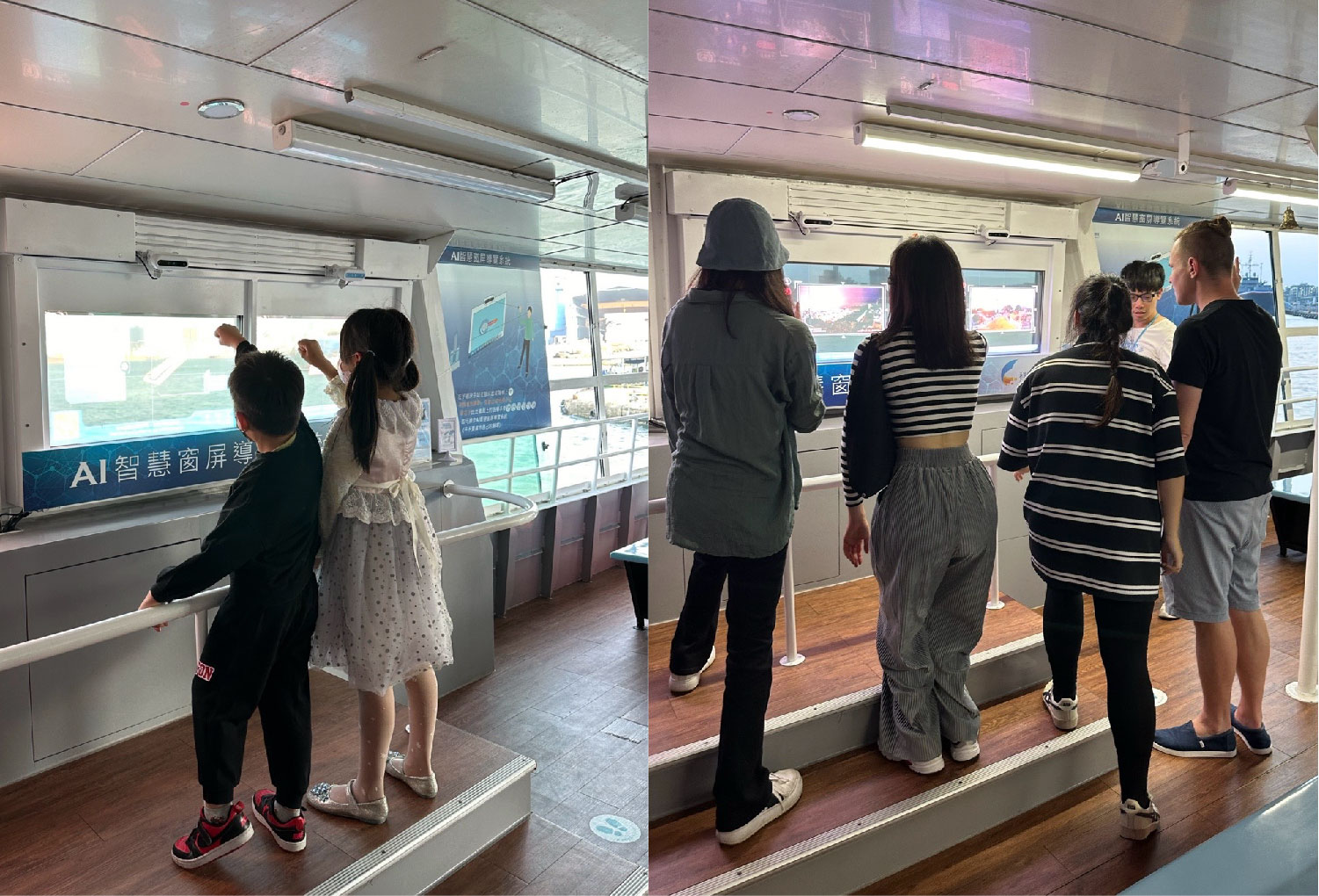
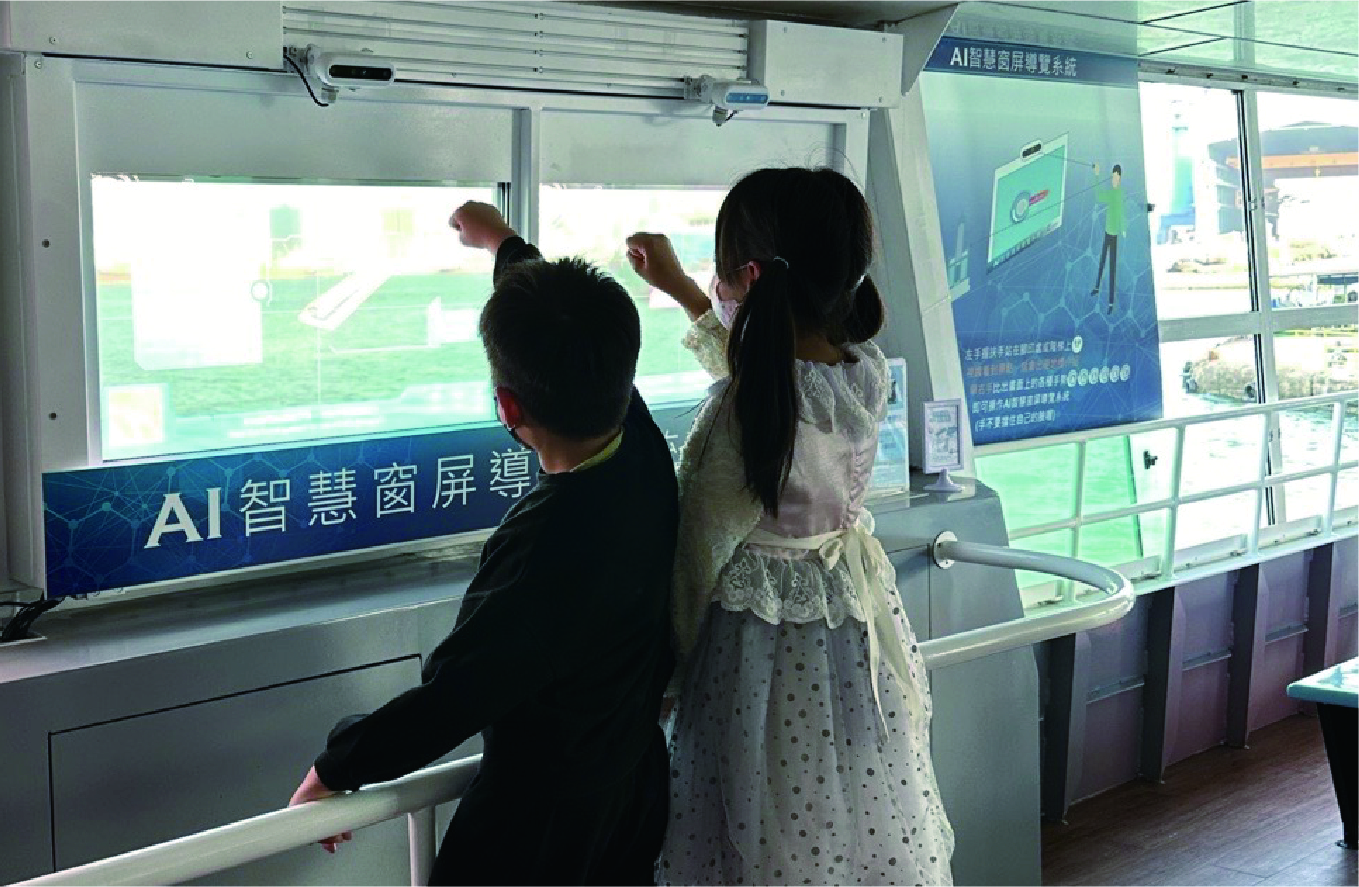
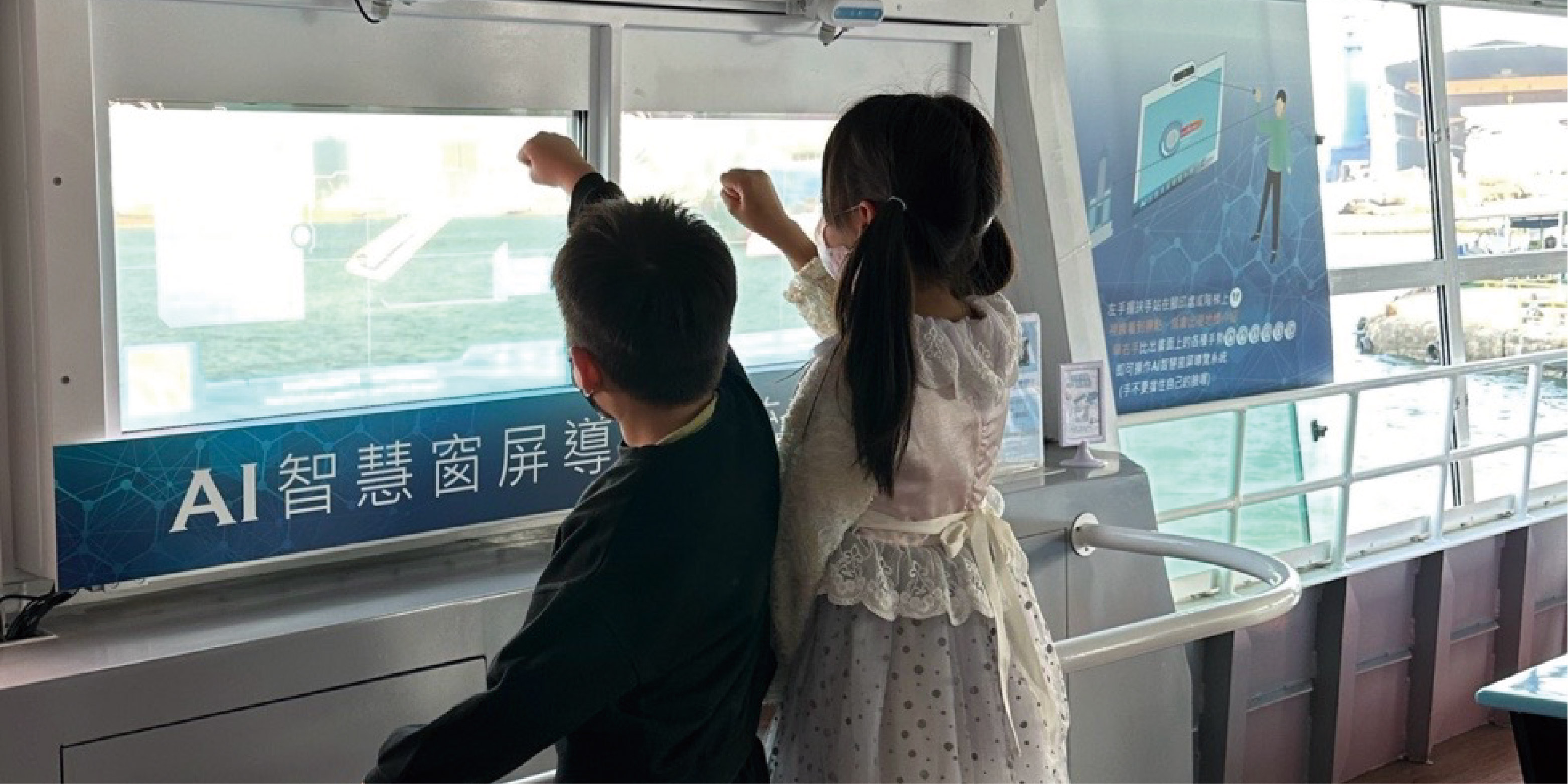
This project focused on enhancing the usability and engagement of an AI-powered Transparent Smart Display aboard ferries. Designed to allow passengers to navigate and interact with scenic guides through gesture controls, the system aimed to optimize the user experience and boost its usage rate by addressing real user needs through field research.
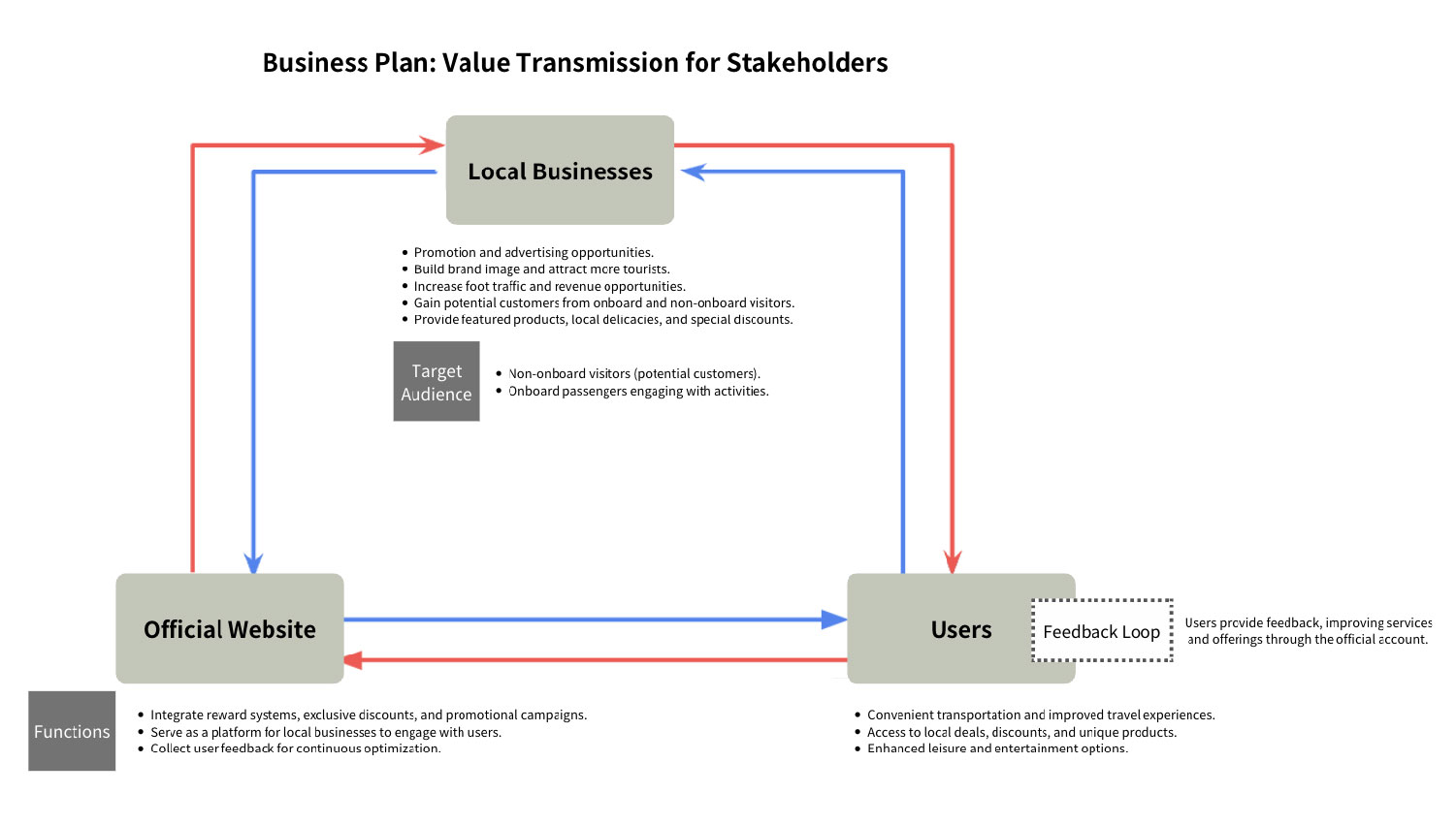
Additionally, the project explored how this device could drive economic growth in surrounding business districts, leveraging its potential as a platform for interaction and local promotion.
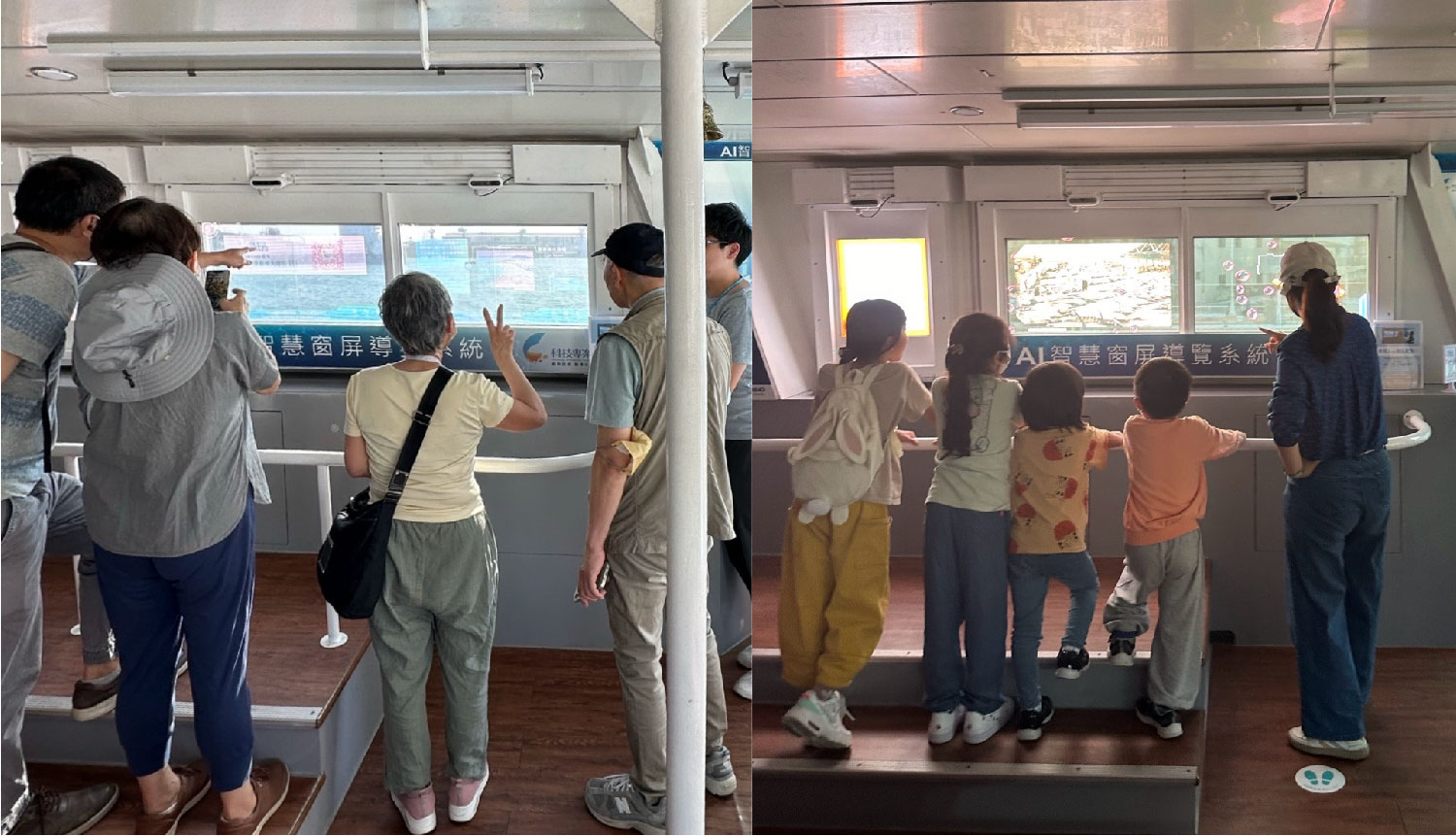
Field Research & User Insights
Conducted on-site visits, user observations, and surveys to gain a comprehensive understanding of how passengers interact with the AI-powered Transparent Smart Display. These methods helped identify their needs, preferences, and pain points. Insights from the research informed the development of Personas, representing key user groups and their motivations, to guide and refine the design process.
Planning for Data Collection
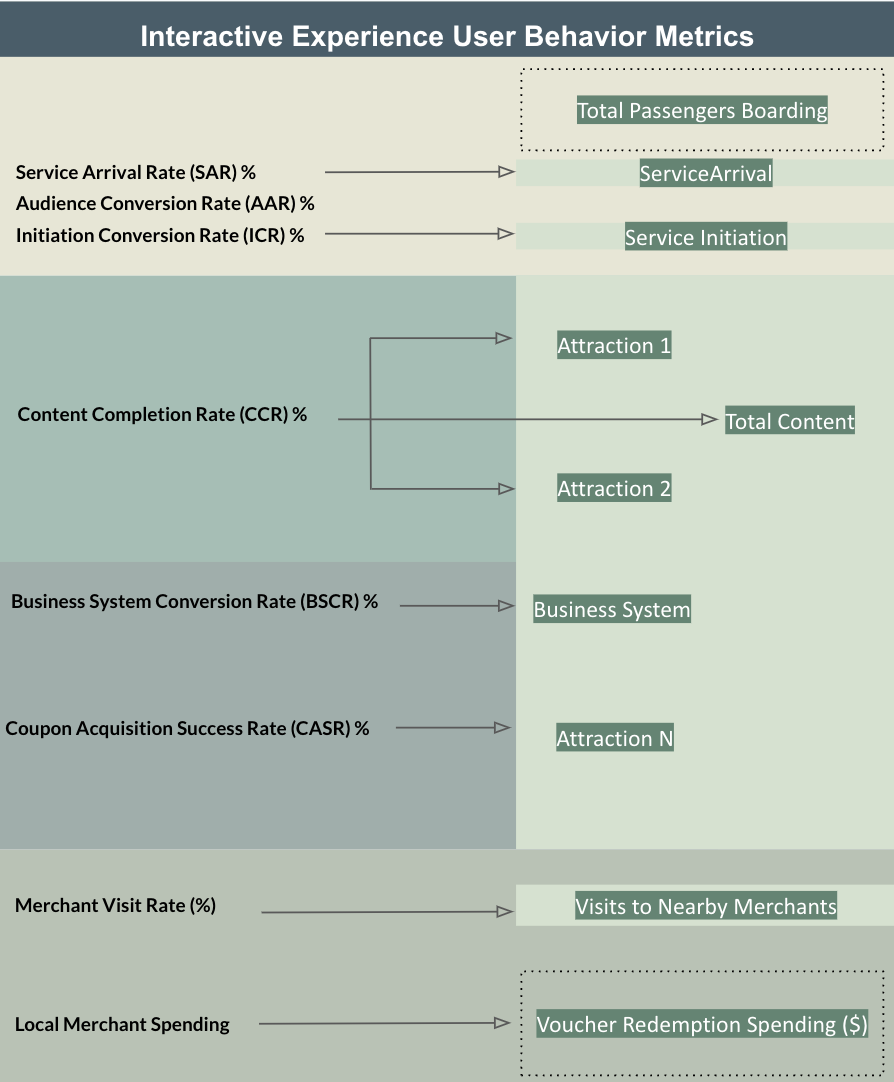
Designed a system to gather user interaction data, enabling real-time analysis of behavior patterns. Developed a framework to track interactions, offering insights that deepen the understanding of user behavior and guide continuous improvement.
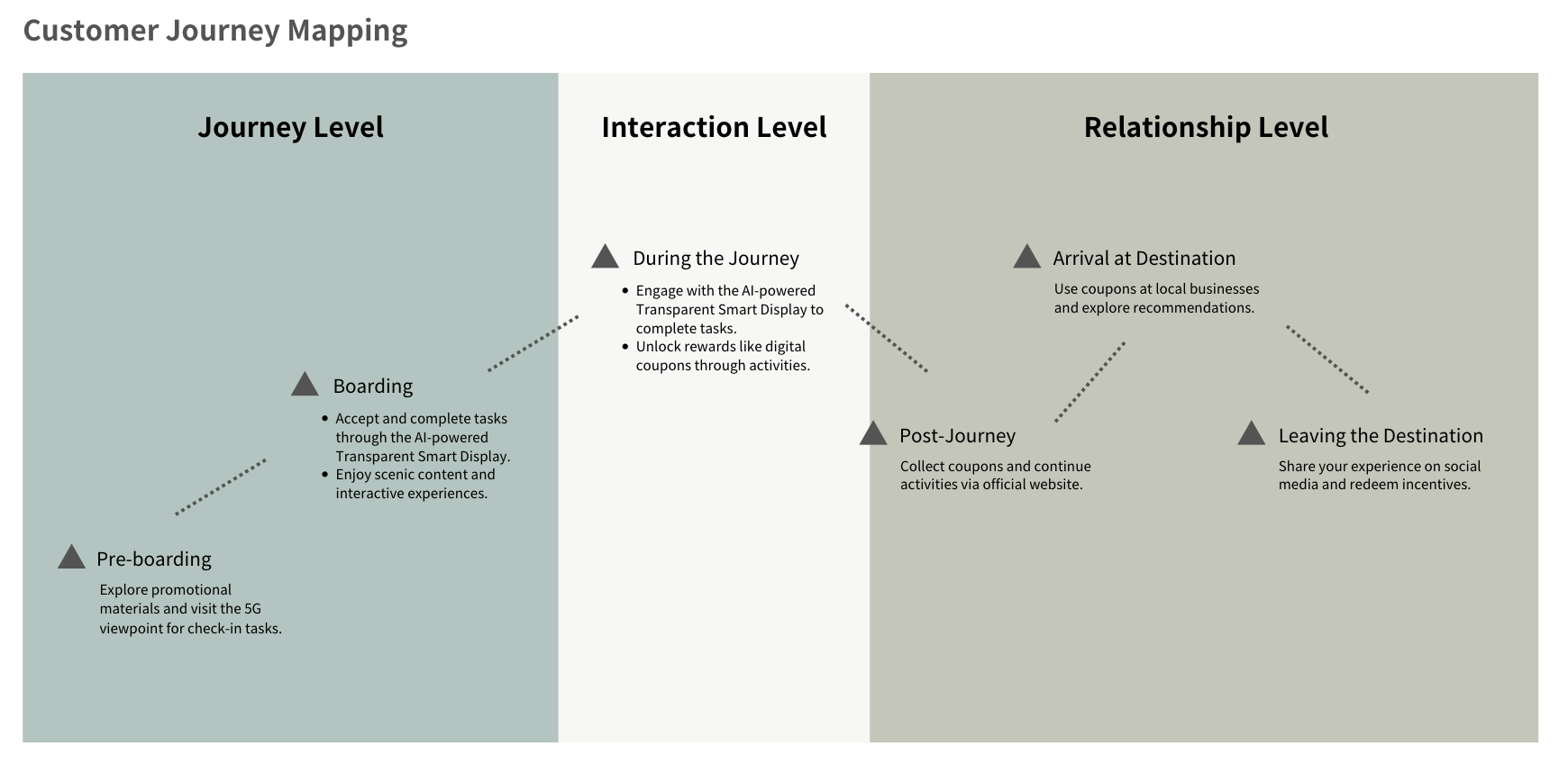
Utilized Customer Experience (CX) principles to map the end-to-end passenger journey, from pre-boarding to post-arrival. This process identified critical touchpoints to enhance engagement and align features with user needs.
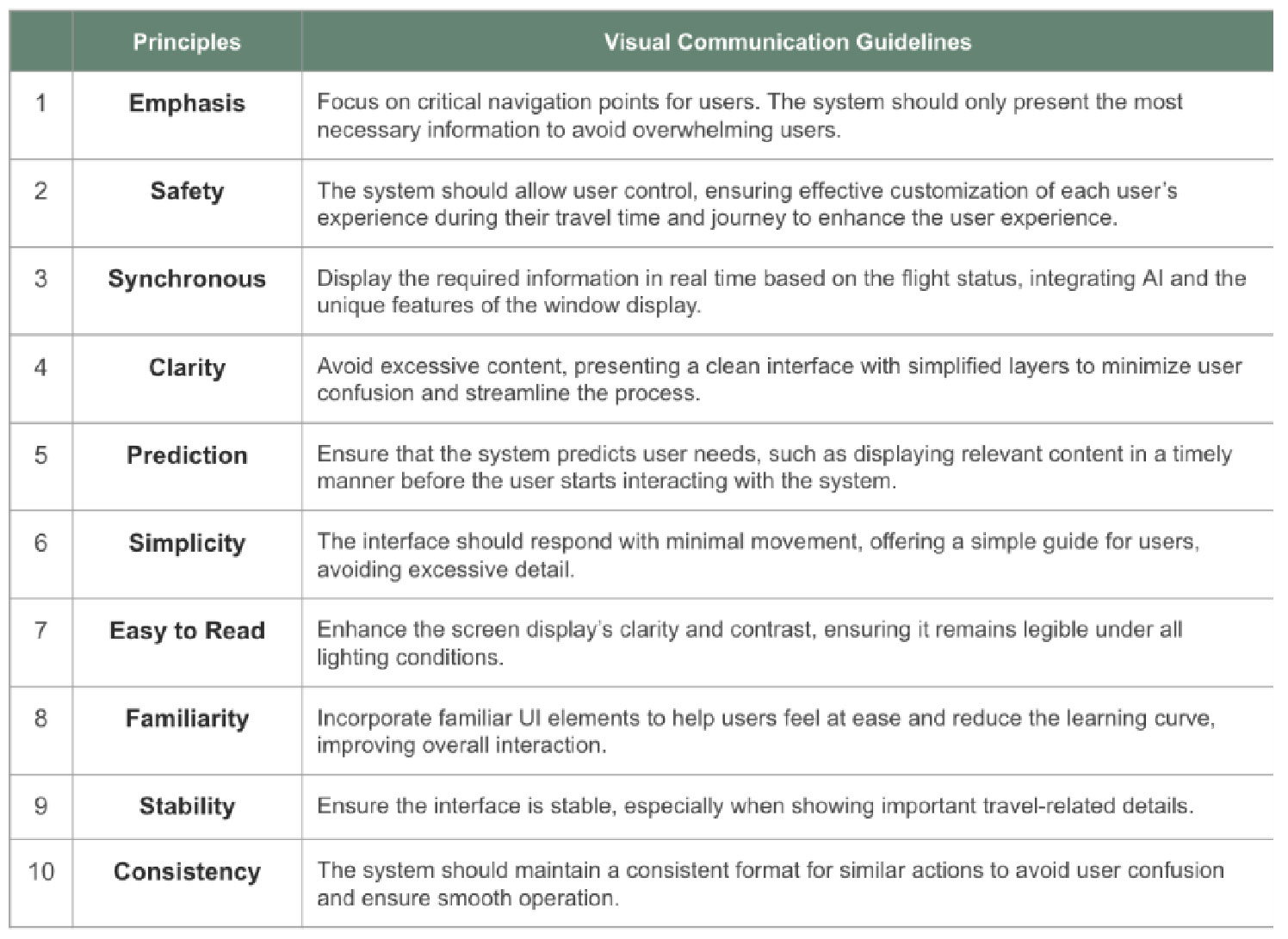
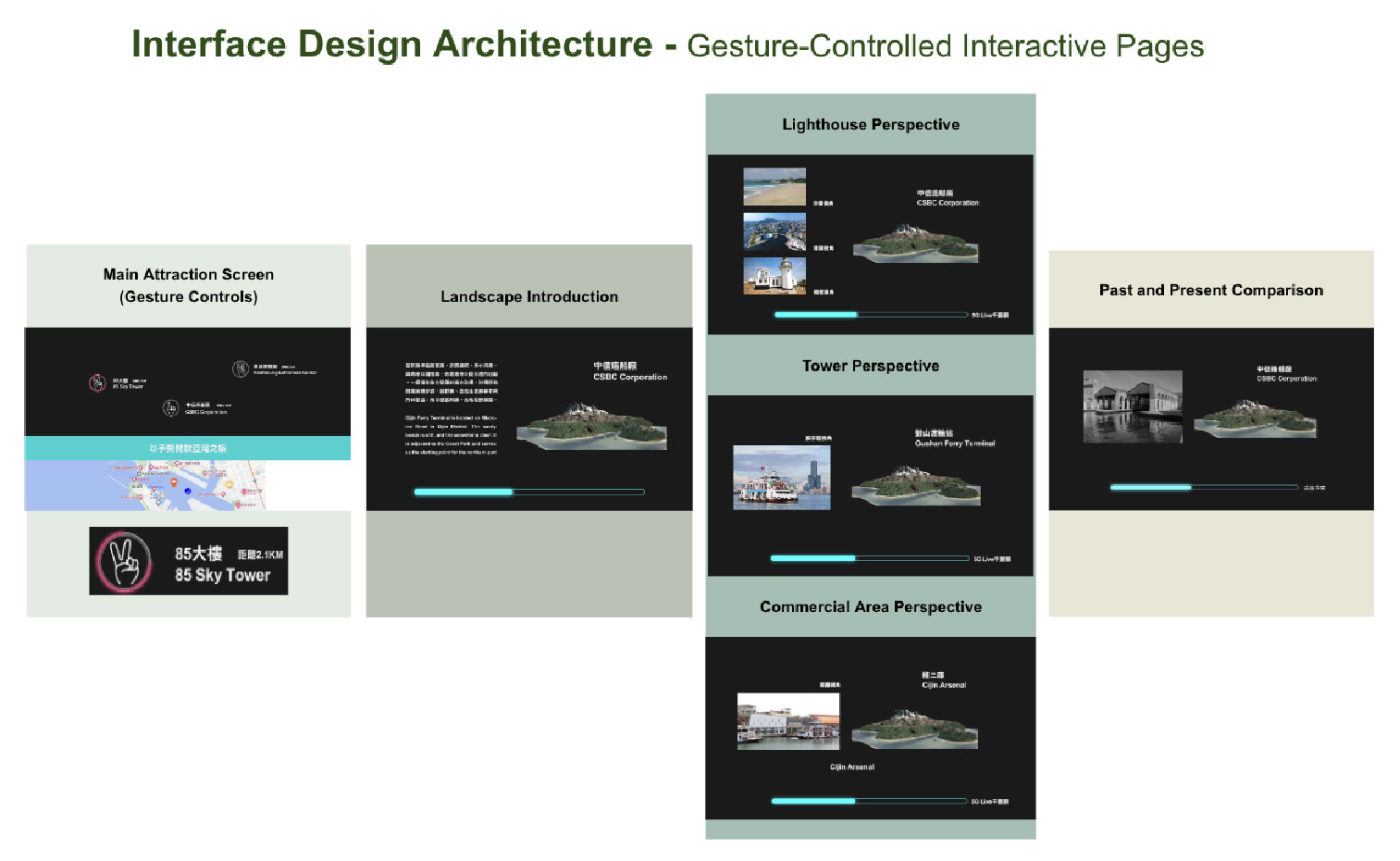
Developed two prototypes following the AI-powered Transparent Smart Display Guide System UI Design Principles:
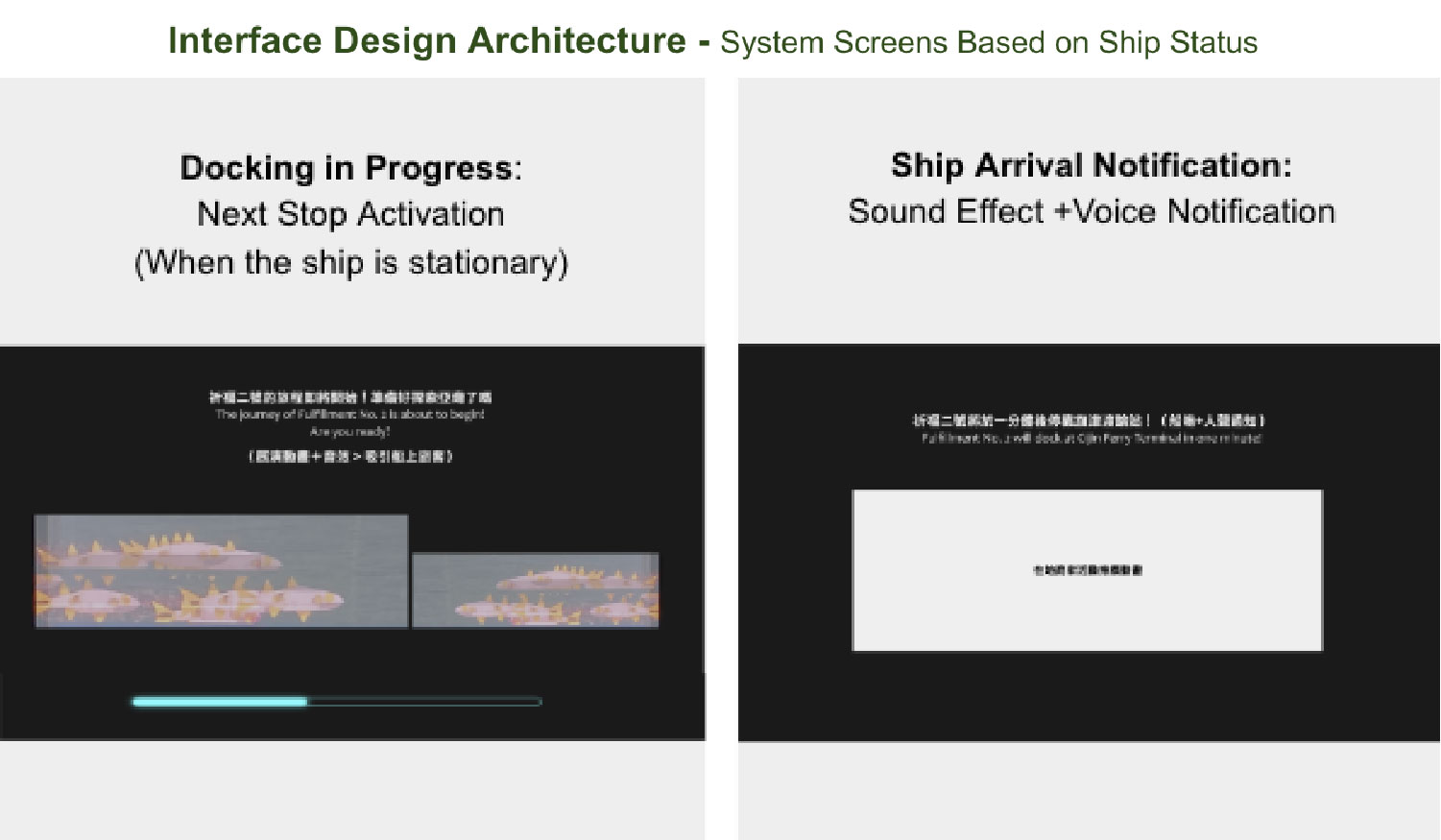
Synced with the ferry's route to display scenic highlights and tasks, incorporating intuitive gesture controls for improved accessibility and ease of use.
A website connecting onboard tasks to local businesses, enabling users to redeem digital coupons at partner stores..

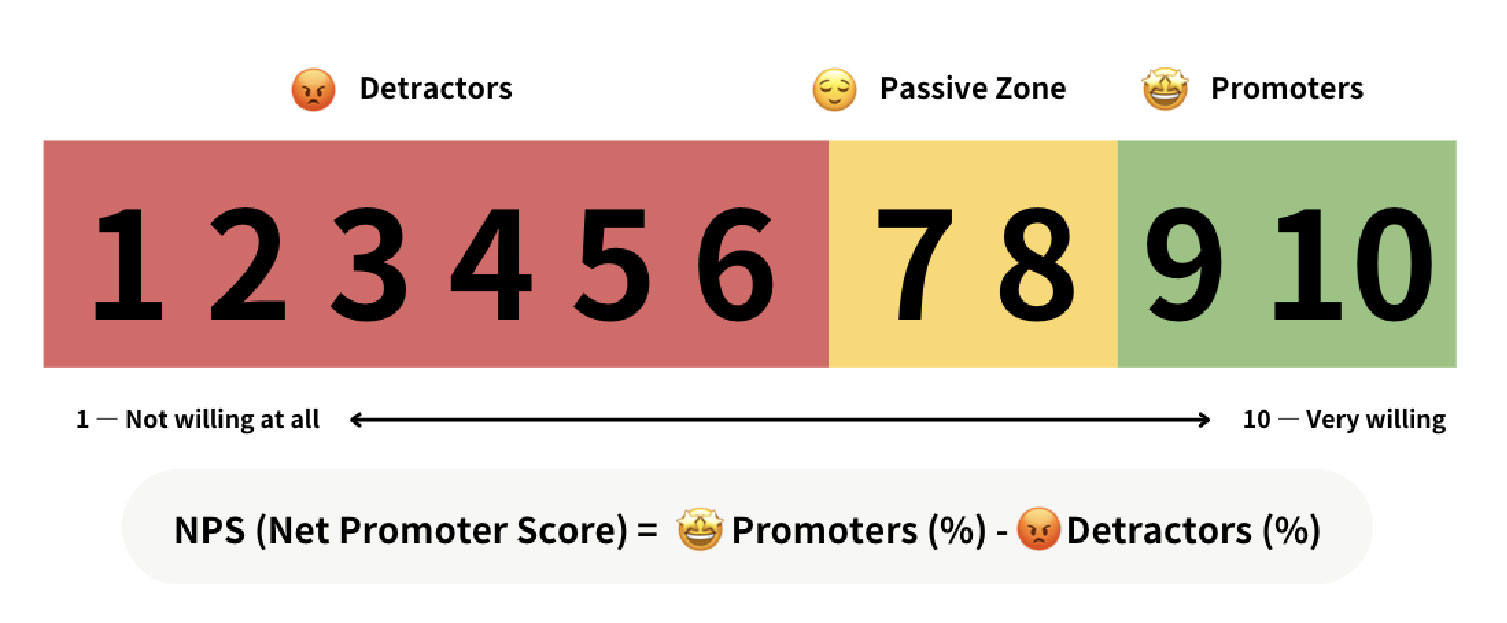
Implemented NPS (Net Promoter Score) metrics to measure user satisfaction and gather actionable feedback on the system. Insights from NPS were used to refine the design, ensuring alignment with user expectations and business objectives.
Through two rounds of field testing, we observed unexpected user behavior, such as passengers gathering at the ferry's stern for photos instead of engaging with the interactive display. Based on this insight, we adjusted the seating layout and added a photo zone, which increased engagement with the display. By combining user feedback and real-world behavior, we refined the design to better align with user needs and boost satisfaction.
This project highlighted the power of user-centered design to make technology more engaging and meaningful, seamlessly integrating into the ferry experience and improving passenger interaction. It also showed how thoughtful design can go beyond usability to support local businesses and create value for the broader community.
Bridging online and offline interactions was challenging, especially with the diverse needs of younger and older users. Making the AI-powered Transparent Smart Display easy for everyone to use took careful planning, and real-world application required balancing passenger experience with business interests. This experience reinforced the importance of designing for both usability and stakeholder value.